
This month’s stories come from Ancient Egypt, Brontë country, and from communities across the UK.
Made in Ancient Egypt
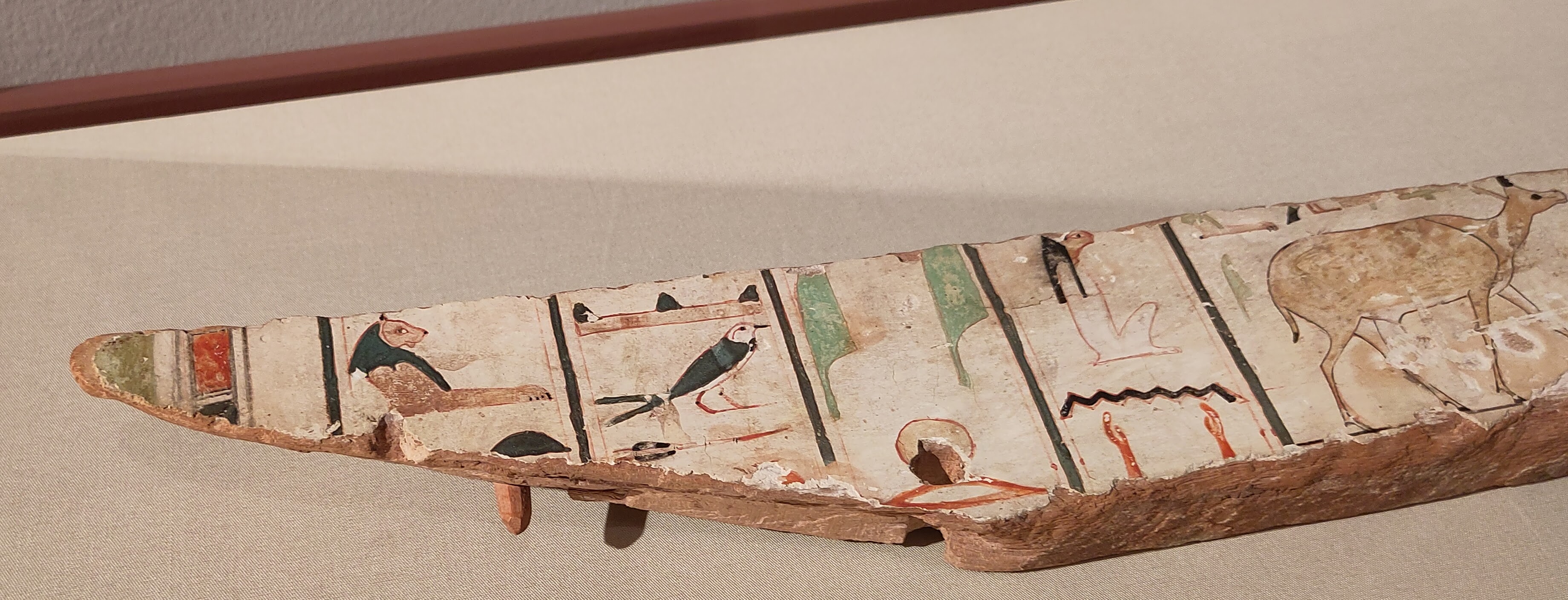
This exhibition at the Fitzwilliam Museum in Cambridge invites visitors to look beyond the finished objects and think about how things were made and by whom. The exhibition is organised by the materials used, so we first encounter stone workers, then clay, glass, metal, jewellery, linen and basketry, wood and papyrus, before ending with the coffin makers who bring together many of the crafts. As well as finished objects, there are fragments which record costs or instructions, and unfinished pieces that show some of the processes involved such as the use of grid lines for design.
The exhibition design is simple but effective. The stone working section is open and light, using dusky pink and linen colours, as well as unfinished MDF. This evokes the heat and light of Ancient Egypt, and an unobtrusive soundtrack adds the chipping of stone. Animations are used to bring fragments of wall paintings showing craftspeople at work to life. The glass and metal working sections are darker and felt warmer (although this may be a psychological trick of the soundtrack which is a crackling fire at this point), before the basketry, linen and papyrus sections lighten things up again with birdsong. All in all it’s a neat piece of design which reinforces the use of natural materials, outdoor work, and the different processes involved in manufacture.
Of the objects themselves, I was most taken with some of the smaller pieces, tiny frogs, jugs, beads and painted details from a coffin. In some ways the most astounding things were those you don’t really expect to survive – a 4,500 year old linen dress or woven sandals. These were all objects that brought the period down to a much more intimate scale than the vast wealth of the burial chambers which I usually associate with Ancient Egypt. Each item in the exhibition told its own story but taken as a whole they also brought a section of society to life, workers, artists and craftspeople.
The exhibition runs until April 12th and is well worth a visit.
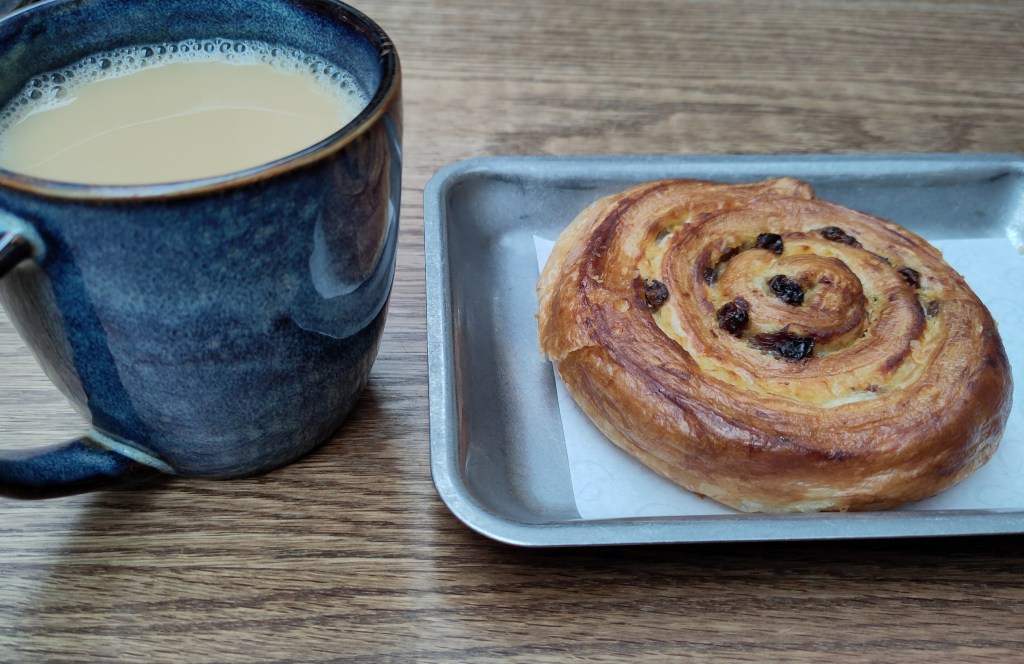
Let me in. The Brontës in Bricks and Mortar
It’s not unreasonable to wonder if there’s anything new to be said about the Brontës, currently having a moment thanks to the latest adaptation of Wuthering Heights. This book comes from writers with good Brontë credentials (Ann Dinsdale is the Principal Curator at the Brontë Parsonage Museum in Haworth and Sharon Wright is a journalist who has also written on the Brontës) and puts the focus on buildings associated with the family.
It’s an interesting approach and the book ends up uncovering layers of stories. As you might expect, there are the connections to the Brontës, their lives and work, but the book also considers the afterlives of the buildings up to the current day, often including interviews with the current owners. Along the way, the authors also tell their own stories, particularly of their ongoing fascination with the Brontës and their reactions to seeing the buildings in various states of disrepair or as well loved family homes.
There are some useful insights, comparing the childhood homes of Patrick and Maria is a clever way of showing their very different backgrounds, the sections that go beyond West Yorkshire to the coast, London or to houses belonging to the likes of Elizabeth Gaskell widen the scope of what is usually seen as Brontë country, and the Bramwell Brontë pub crawl section is fun.
It’s beautifully illustrated, with archive and contemporary photography. A map might have been helpful, especially for readers less well acquainted with locations in the north of England than me, but that’s a minor quibble. It moves more or less chronologically through the Brontë lives and is an easy read. There’s a nice afterword about the filming of Sally Wainwright’s 2016 biopic To Walk Invisible, where the team built a replica parsonage to meet the demands of a busy film set.
It’s probably a particularly interesting read if, like me, you’re interested in the mythic status of the Brontë story and / or literary tourism, as much as the sisters and their novels. Many of the stories touch on campaigns to save buildings with Brontë connections, such as the recently reopened Birthplace in Thornton. It’s surprisingly light on the novels themselves and inspiration for them, although the locations that inspired the famous homes such as Thornfield Hall and Wuthering Heights are contested anyway. Curiously, the one thing the book didn’t do was make me itch to reread one of the novels, unusual after reading in the literary biography genre.
A million acts of hope
A million acts of hope is a recently launched project which is bringing together community and faith groups, as well as charities of all sizes.
Watching the news or looking at your social media feed, it’s easy to believe that the UK is more divided than ever. The voices of those who seek to spread hate, harm our communities and separate us are loud.
But the reality is millions of people across the UK show up for each other, their neighbours and their communities every single day. From litter picking in parks to donating stuff to food banks, coaching our kids’ football teams to working together to make our streets safer – acts of hope and kindness happen all the time.
These stories are too often left untold. So, in May 2026, community and faith groups, plus charities big and small, will come together to celebrate and inspire A Million Acts of Hope across Britain. There is far more that connects us than divides us.
A wide range of partners have already signed up including charities as diverse as the Wildlife Trusts, the WI, Christian Aid, the refugee council and Crisis. I’m really looking forward to seeing where this positive, inclusive project goes.
I wrote a post earlier this month about how much I enjoy working with community and grassroots organisations who are making a difference in their local area so this is a subject close to my heart. I hope the project can help inspire a wave of creative and inspiring storytelling that takes on the divisive narratives currently being pushed in the media.

 Shelly Dennison