
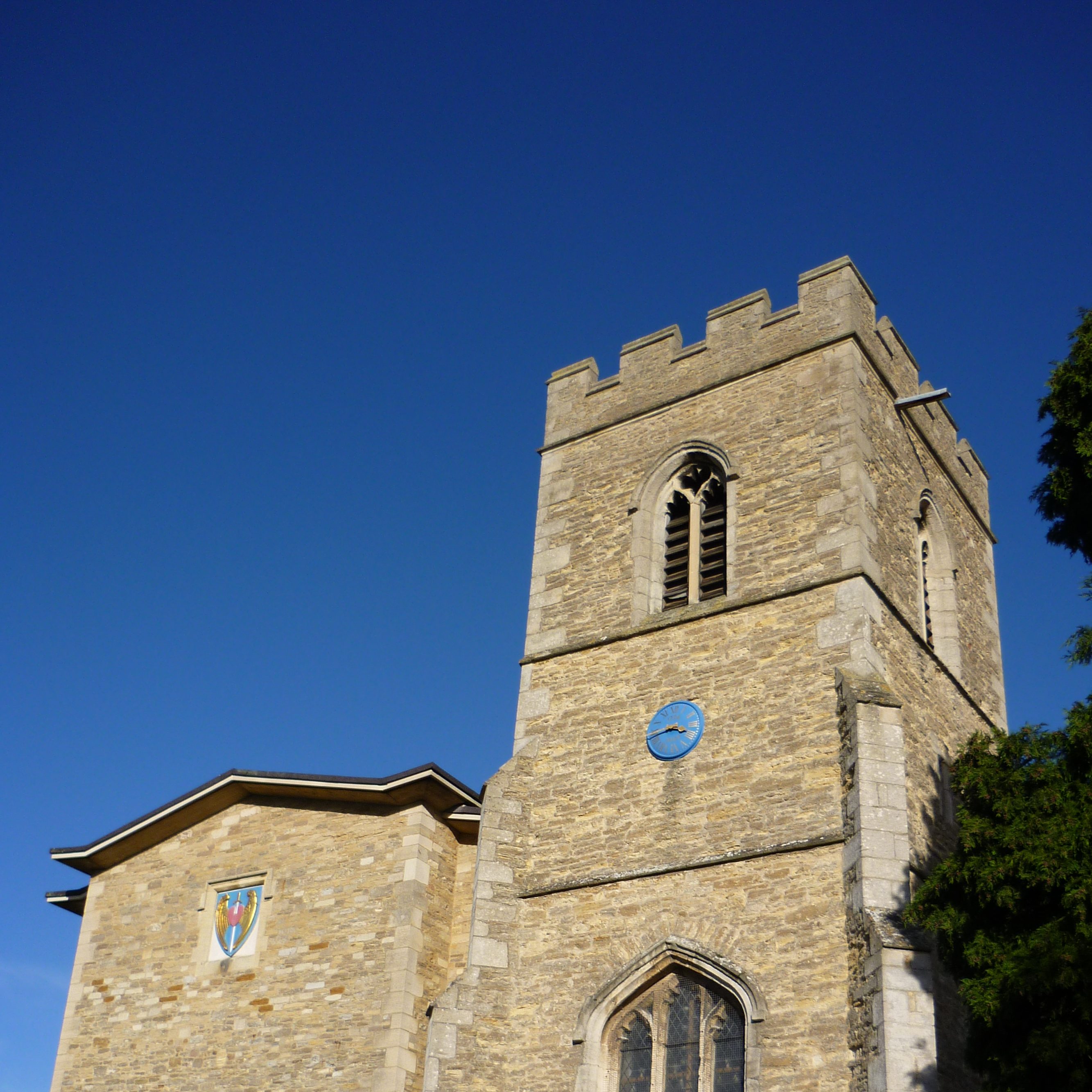
The swifts are circling the church tower, first a couple, then two more and soon there are twenty or more overhead. We all look up in wonder, holding our breath, as still as the warm summer air. There are two newly installed swift boxes in the tower, we want them to be at home here.
The sound we were hearing from the skies is older than that made by the oldest two bells in the tower, both now over 400 years old. The church itself will mark 800 years in a few years time, and so I turn to thinking about what it means to reckon 800 years in a single place, is it the blink of an eye or a long stretch of time?
It’s an interesting building because it reflects the history of the community, growing from a small village separate to the local town, to a suburban area of that town. The oldest part of the current church dates from the 15th century and still has the intimate feel of a church serving a small agricultural village. Its uncovered stone walls emphasise its connection to the past. A Chapel of Remembrance was created after the Second World War, while the larger part of the church dates from the 1950s and is a surprisingly sympathetic extension. Its white walls and relatively simple decoration make this part of the building feel much lighter and airier. The very stones of the building tell the story of how a small village church was adapted to meet the needs of a community facing huge housing growth.
Over the last 800 years the church has seen many baptisms, weddings and funerals, making it a part of the stories of many of the people who live or lived here.
I peel back the layers
At the outbreak of World War One, a small village clustered around the green. Two inns, a school, a reading and recreation room, a few houses. The church sits within the grounds of a manor house (now long since demolished) and was much smaller, the extension not yet added, Opposite the church and to north are open fields. The village’s young men go to war. The occupations of the men and their families are a window into life here – groom, baker’s errand boy, blacksmith, cycle shop assistant, gardener, cowman, dairyman, cabinet maker, tailor, farm labourer, driver, post errand boy, milk boy, market garden labourer, cart driver. The sounds they can hear, bells, birds, the blacksmith, cattle, thunder.
A small step further back in time and Thomas Laxton is setting up in business as a ‘seed grower and merchant’ in the town. He specialises in developing new varieties of strawberries. His sons, Edward and William, go into business together and concentrate on apples, pears and plums. By 1900 they operate a 140 acre nursery outside the town and within the parish boundary of the village. In the period between 1895 and 1925 many of the most famous varieties of Laxton’s fruit are produced including the apples Laxton’s Superb and Laxton’s Favourite. It’s now the site of the town’s university.
Peel back another layer. The middle of the nineteenth century and the village’s Enclosure Act is being passed. The names of the three open fields have changed over the centuries, reflecting their positions – east, south, west, or highlighting significant locations – the river, the church, the windmill. Something shifts in how the land is farmed and thought about.
Back another two hundred years and after the suspension of the penal laws against Nonconformists, John Bunyan has applied for a licence to allow Edward Isaac to preach at Gilbert Ashley’s house in the village. Gilbert is the miller at Castle Mill (once owned by the wealthy Cistercians at Warden Abbey, only ten miles away) and will marry in the parish church in five years time. His bride will be Elizabeth, John Bunyan’s second daughter. Before the 17th century is out, the river Great Ouse, which defines part of the parish boundary, will became navigable to the heart of the town. The impact will be immediate as along the riverfront shops, yards and wharfs spring up, the air ringing with the noise of cargoes being loaded and unloaded and the stamp of horses’ hooves.
Back yet another hundred years or so and Newnham Priory is being dissolved. Gone is the sound of plainchant and the smell of incense. It was founded under Henry II by the local Baron, with the village just one of a number of churches and manors gifted to the Priory. The inventory included “fish ponds and a meadow called the grete gardeyn with stone walls and a moat and a water mill”. The monastic complex is now under a leisure park, car park and fire station. Remnants of the priory wall can be seen in the country park, where a Roman farm and bathhouse are similarly lost, hidden beneath the lake.
Three hundred years earlier, in 1228 the parish church records its first clergyman. It’s likely that an older building stood on the site but the exact dates are lost in the mists of time. What we do know is that when William I assesses his new territory via the Domesday Book in 1086 there is a water mill worth 30 shillings and 100 eels, and enough woodland to support 100 pigs. The villagers can hear the water turning the mill wheel, the snuffling pigs, the swifts in the sky.
Hundreds of years in a few hundred words. The blink of an eye. It’s an ordinary tale that could be told of many places, always the same yet always different.
Later, in the depths of a cold, wet winter, as the damp seems to seep into the stones of the church, we think of the return of the swifts and the turning of the year. Will they make their home here? Will they become part of the story associated with this church, this place? We can but hope.

 Shelly Dennison