Henry rides with the hunt, watched from the tower by the women of the court. One of them loses a dress pin, which will only be noticed later as she prepares to feast and dance with the best of England.
Henry VIII’s hunting ground
Henry VIII was a regular visitor to Ampthill Castle and Great Park, often coming in the autumn to hunt. In 1533 Katherine of Aragon lived in the castle, a fortified house, whilst the annulment hearings were in progress. Anne Boleyn also visited at least once, hunting alongside the King. The whole court would have accompanied them, bringing their wealth to the town. There is archaeological evidence of a Tudor hunting lodge on the eastern side of the park, including a ‘standing’ or vantage point from where guests could shoot or watch the deer hunt. Accounts from 1534 refer to a Queen’s Standing, and a King’s Standing is mentioned in 1540. Henry praised Ampthill for its ‘marvellous good health and clearness of air’ and enjoyed his stays at the Castle.
Henry VIII’s party would have included courtiers seeking preferment as well as people serving the needs and desires of the King and his court. Cooks, servers, cleaners, dressers, laundresses, musicians and dancers arrived alongside. All these people had to be fed, watered and accommodated. After a day’s hunting the evening would have seen feasting on venison and other dishes as well as entertainment, music and dancing.
Hunting game in the Tudor period was reserved for the rich and royalty, with rabbit and hare the only choices for poorer people. A perhaps more surprising luxury was pigeon.
The finest medieval dovecote in Britain
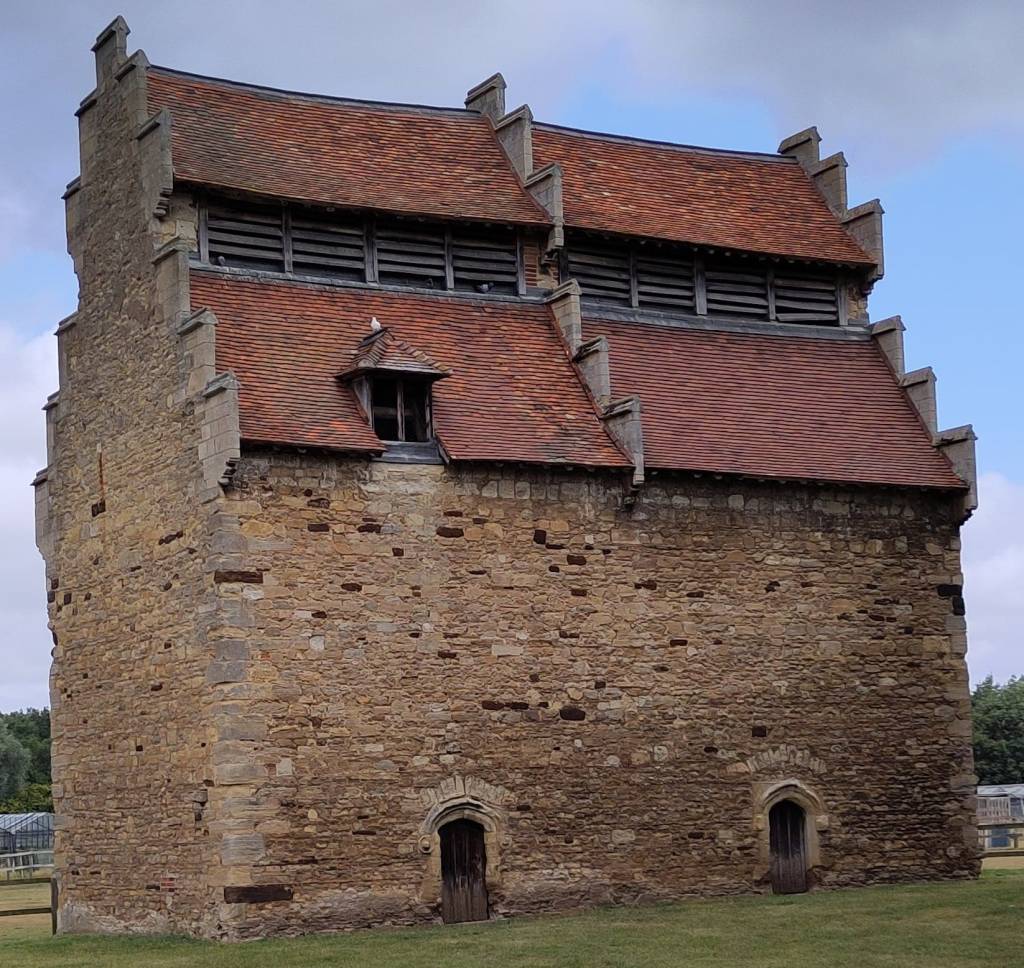
The dovecote at Willington was built by John Gostwick in the early 1540s and is described as ‘possibly the finest medieval dovecote in Britain’ by Francis Pryor in his book ‘The Making of the British Landscape’. Gostwick came from a family of tenant farmers in Willington but rose to be Comptroller of Thomas Wolsey’s household. It was a senior position, giving him oversight of expenditure. He purchased the manor of Willington in 1529. Gostwick survived the falls of Cardinal Wolsey and Thomas Cromwell, and in 1535 Henry VIII made him responsible for collecting revenue from the religious houses in Bedfordshire, Buckinghamshire and Huntingdonshire; and later for collecting and accounting for all the money owed to the King because of the dissolution of the monasteries. He was knighted in 1540, and the following year Henry VIII visited Willington, holding a meeting of his Council in the manor.
The story of the Willington Dovecote is one of politics and religion, the building materials for Gostwick’s estate came from redundant abbeys. He bought the Newnham Priory site in Bedford, lead from Greyfriars Priory made its way onto the Willington church roof, along with medieval tiles from Elstow Abbey. He demolished the old manor house and reused the building materials along with the reclaimed monastic materials to make his new buildings.
In the Tudor period, a dovecote of the size that Gostwick erected was a clear display of wealth and success. Pigeon was a luxury, only the wealthy could afford to rear birds in dovecotes, serving them at banquets or giving them away as gifts.
The building would have been limewashed outside and cool and dark inside. The birds were protected from predators and had plenty of room to perch in the steeped gables. There were 1,500 nesting boxes so the dovecote could have held up to 3,000 birds at a time, with baby pigeons hatching every few weeks. Imagine the smell and the noise. At the end of the season the best birds would be kept for breeding in the next year and older birds given to the servants to feed their families. However, for local tenant farmers the birds were a serious threat to their crops, they fed on the grain left lying on the ground after harvest but also on seed grain and vegetable leaves.
These two animals offer us a glimpse of some of the ways in which Tudor power and wealth were displayed and exercised. Archaeological finds like a dress pin in Ampthill Great Park and buildings like the dovecote help bring to life the stories of rich and poor alike.