Over the last couple of years I’ve become really interested in the way in which environmental storytelling is breaking through into new spaces including museum exhibitions, fiction and visual arts.
Exhibtions
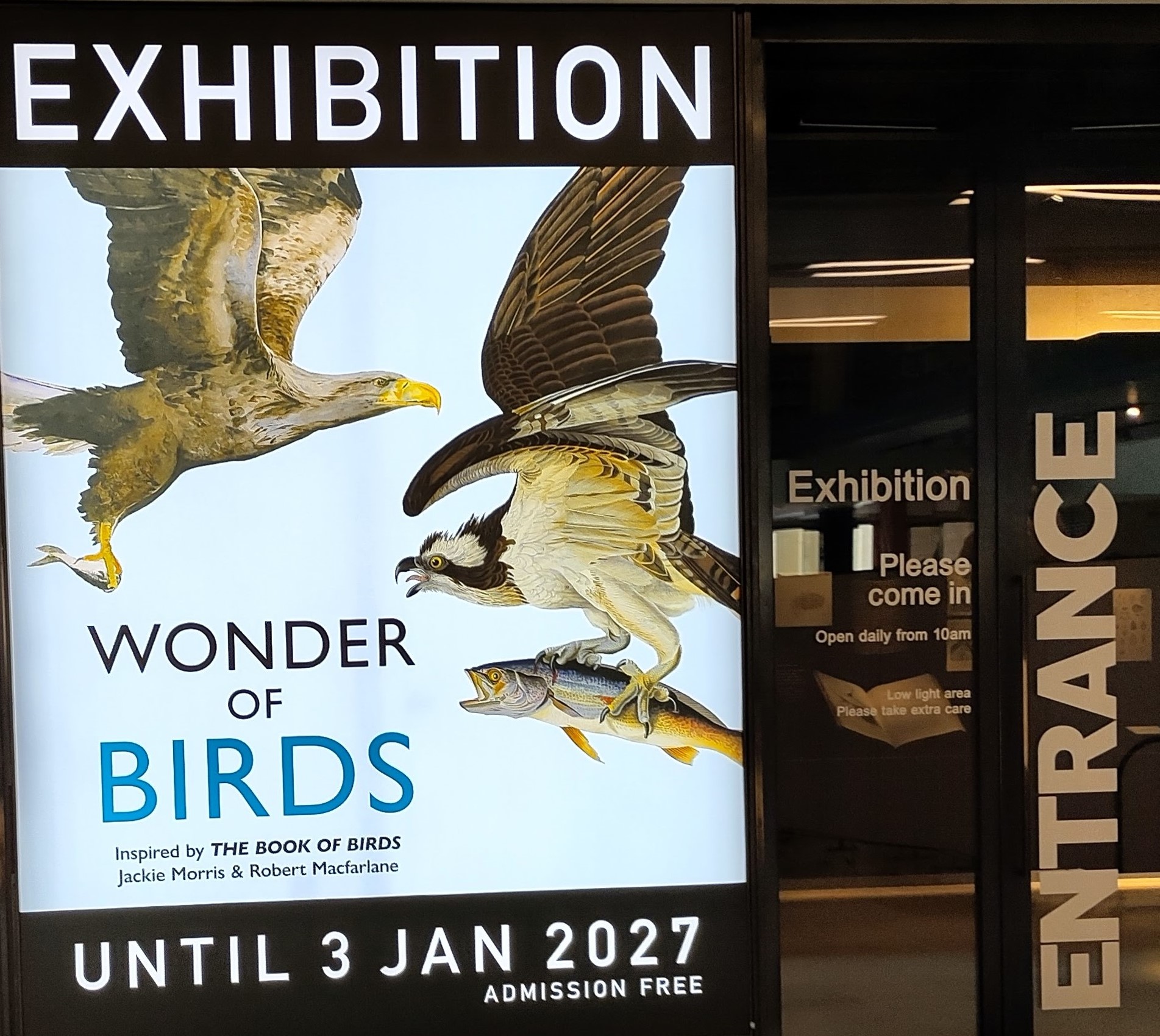
My latest blog post for the John Ray Initiative (JRI) is an exhibition review which looks at two very different exhibitions currently on in Oxford. The Bodleian Library’s Wonder of Birds exhibition is inspired by the The Book of Birds, the new book from Jackie Morris and Robert Macfarlane, while Soma Surovi Jannat: Climate, Culture, Care at the Ashmolean Museum is part of the NOW exhibition series, where contemporary artists are invited to create new work inspired by the Ashmolean’s historical collections.
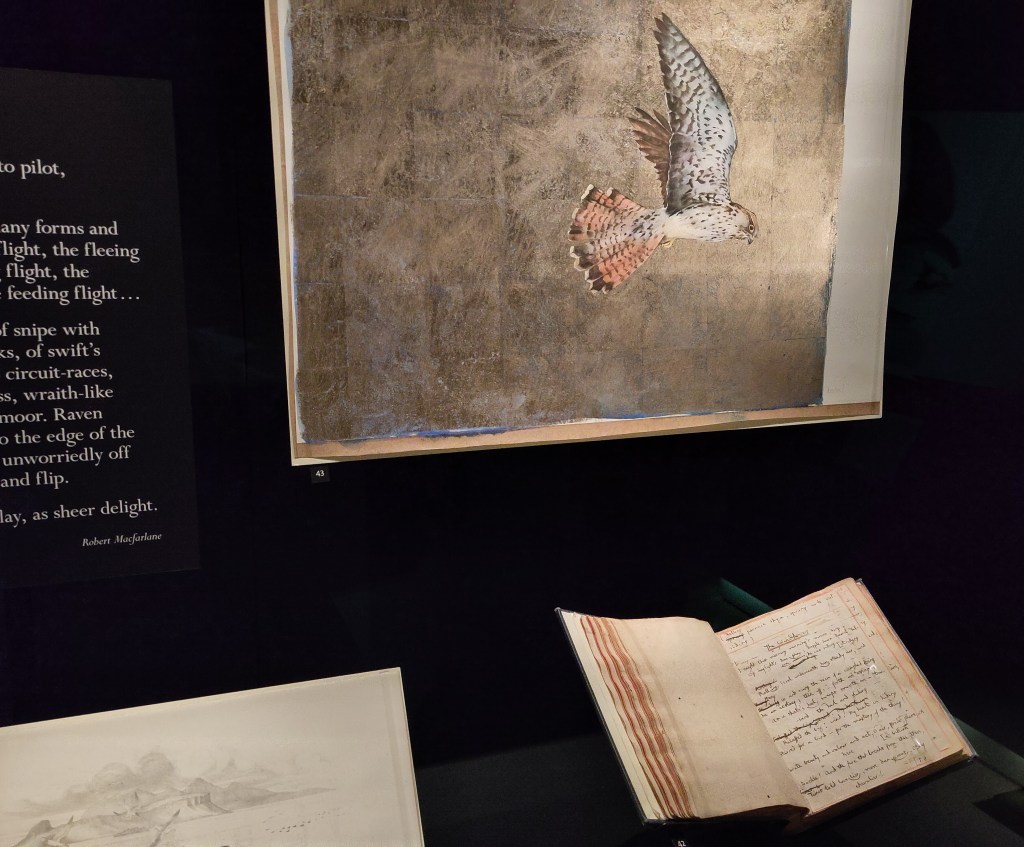
The Wonder of Birds: Gerard Manley Hopkins’ manuscript of Windhover which was paired with Jackie Morris’s painting of a kestrel.
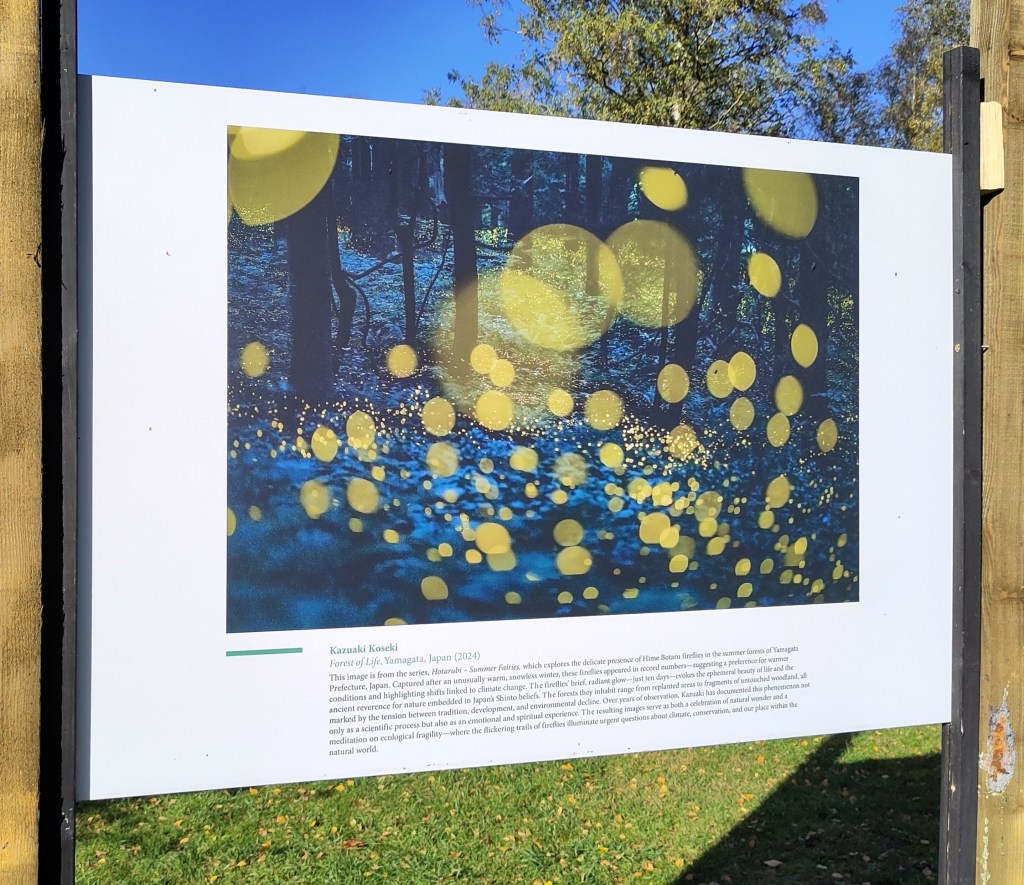
Last year I caught the Earth Photo 2025 exhibition tour at the National Trust’s Anglesey Abbey in Cambridgeshire. The photographs were shown outdoors in the Heritage Orchard and the combination of the natural surroundings with occasional planes overhead felt like a good encapsulation of what the prize is about – drawing attention to the challenges facing the natural world and our planet.
There was some really good environmental storytelling on display and I liked the mix of hopeful and sobering reflections on where we are. Many of the images that drew me in also picked up themes I’m particularly interested in around ecosystem fragility and restoration, fostering a sense of wonder, and balancing the needs of nature and people.
Climate fiction
In 2025 I reviewed some of the contenders for the inaugural Climate Fiction Prize for JRI. The organisers explained that
“Through great stories, it will support societies to fully grasp the climate change threat and to
embrace its solutions. It’s not enough for audiences to know about climate change; they need to
see an uncertain future and understand that change is urgent but possible.”
I reviewed Samantha Harvey’s Orbital and Natasha Pulley’s The Mars House in depth and a round-up post featuring four other climate fiction titles to explore some of the trends. One of the defining features of it as a subsection of fiction is its sheer variety. The books come from a range of genres and explore different aspects of the climate crisis. For me they are at their most successful when the characters feel well rounded and we care about what happens to them, where the themes don’t override the story.
Using climate stories in popular culture such as novels, films and television is something we are likely to see more of as creative storytellers look to reach beyond the traditional climate audiences.


