In the summer sun, the air is filled with the scent of Spain, the taste of fruit carries a hint of adventure. The gardens of the well-to-do are glistening with treasure.
Celia Fiennes visited Woburn Abbey, the seat of the Duke of Bedford, as part of her 1697 tour. Fiennes was born in 1662 in Salisbury and explored the country on horseback – an unusual enterprise for women at the time. She wanted to improve her health but was also an enthusiastic traveller for its own sake. She described her visit to Woburn, including the gardens, vividly:
There are 3 Large Gardens, fine Gravell walks and full of fruite. I Eate a great quantety of ye Red Coralina goosbery wch is a large thin skin’d sweete Goosebery. Ye walks are one above another wth stone steps. In the square, just by the dineing roome window is all sorts of pots of flowers and Curious greens, fine orange, Cittron and Lemon trees and mirtles, striped ffilleroy and ye fine aloes plant. On the side of this you pass under an arch into a Cherry garden.
Woburn Abbey wasn’t the only country seat growing exotic fruit. Houghton House produced oranges, lemons and melons. There were myrtle and oleander trees, and the orchards groaned with medlars, peaches and nectarines. Today, the atmospheric red brick ruins provide a perfect backdrop for views over the Bedfordshire countryside, leaving visitors to imagine the house surrounded by formal walled gardens, avenues of trees and an artificial ‘wilderness’. A kitchen garden, cherry garden and drying yard stood next to the service wing of the house, where the servants would have lived and worked.
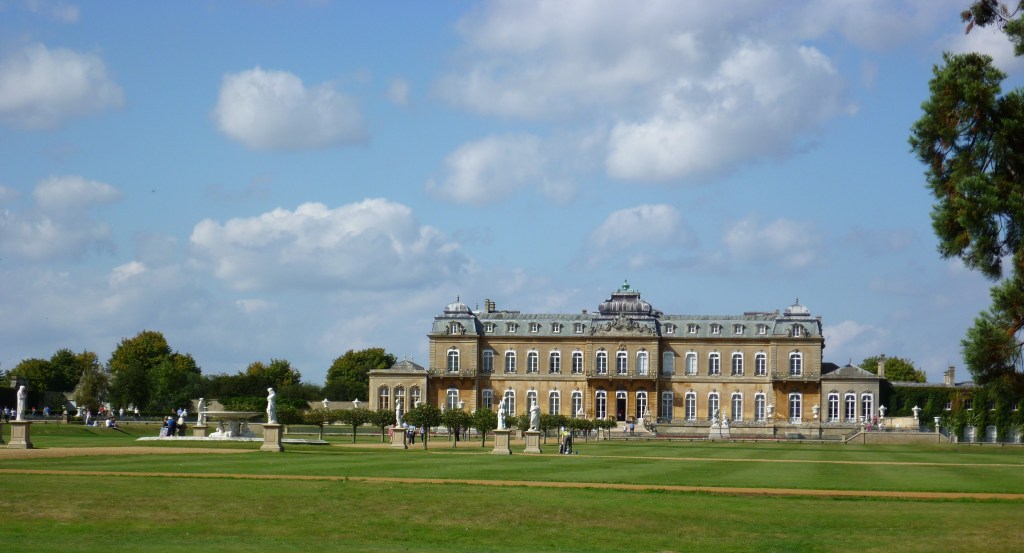
Later, at Wrest Park, an orangery was built in the mid 1830s. A concealed full height wooden doorway allowed mature trees to be taken outside in the summer and a pump brought up water from a big tank in the basement. The building was inspired by French examples and the orange trees were said to have been bought from Louis Philippe by the de Grey family.
Gardens designed for pleasure are a window into the lives of the gentry and their gardeners. The story of exotic edible fruit in the county is one not just of food, but of wealth and fashion, connections to the continent, and the increasing expertise of gardeners to cultivate new species on Bedfordshire soil.